Stop Washing Your Hair on a Schedule: 6 Habits Salon Pros Wish Would Die in 2025
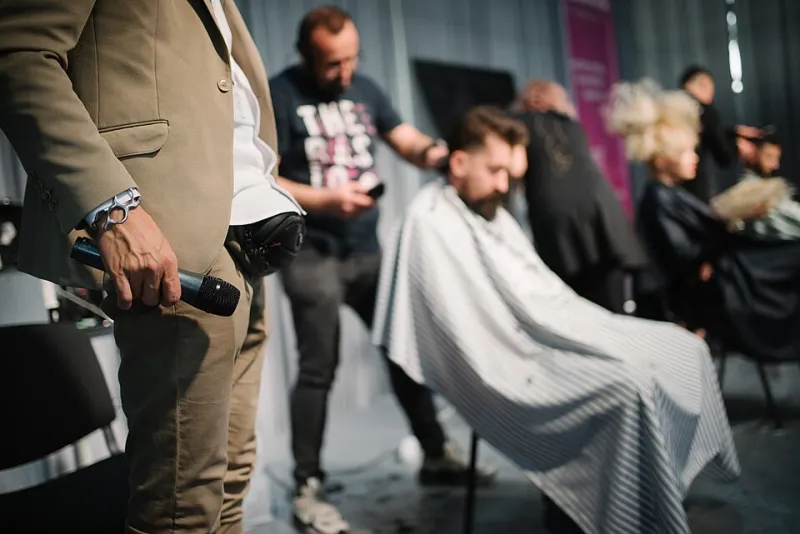
Photo: Shixart1985, CC BY 2.0, via Wikimedia Commons
Somewhere along the way, haircare advice became a numbers game. Wash every three days. Trim every six weeks. Ten steps before bed. But ask any stylist what's actually wrecking their clients' hair, and the answer is almost never "you're not following the schedule." It's that you're following someone else's.
We talked to two stylists — Marisol Vega, a color specialist in Phoenix with 12 years behind the chair, and Dana Okafor, a curl-focused stylist in Atlanta — about the habits they'd ban outright. Their answers were blunt. We love that for us.
Habit #1: The "3-Day Hair Rule"
"If one more client apologizes for washing her hair 'too early,' I'm putting a sign on my station," Vega says. "There is no universal wash schedule. Your scalp is an ecosystem, not a calendar."
Okafor agrees, and adds that the rule hits curly and coily clients hardest. "Curly scalps often need more frequent cleansing, not less, because product buildup and sweat sit on the scalp while the ends stay dry. The 'stretch it to day five' advice was built for straight, fine hair — and even then, it's a suggestion, not a law."
Instead: Wash when your scalp feels like it needs it. If that's every other day, great. If it's once a week, also great. What matters is using a shampoo that matches your scalp type, not your social calendar.
Habit #2: The DIY Trim
Every stylist has a story about the client who "just cleaned up her own ends" and showed up needing two inches removed. "Blunt kitchen scissors crush the cuticle instead of cutting cleanly," Okafor explains. "A clean cut from a professional grows out better. A hack job splits higher and faster."
Vega's rule of thumb: "If you can see the split end without a magnifying mirror, you've already waited too long anyway. Come in. It's a 30-minute appointment, not a betrayal of your budget."
Instead: Book trims based on your hair's behavior — when ends feel rough or styles stop holding — not a rigid six-week timer. Between cuts, a light leave-in or sealing oil on the ends buys you time legitimately.
Habit #3: The Mystery Amazon Deep Conditioner
Scroll the beauty section of any mega-retailer and you'll find jars promising "salon repair" at a third of the price. The problem, Vega says, is verification: "Third-party sellers, inconsistent storage, and formulas that read like a word salad of silicones. Your hair might feel soft for a day and be worse off underneath."
Okafor isn't anti-drugstore — she's anti-fake. "I recommend drugstore lines to clients all the time. The issue is buying from an unverified listing. If the price looks too good, the product might be expired, diluted, or not the real formula at all."
Instead: Buy hair products from the brand, the retailer's own storefront, or your salon. And judge a deep conditioner by ingredients, not vibes — look for hydrolyzed proteins or fatty alcohols high on the list, not a fragrance-first formula with "repair" on the label.
Habit #4: Drowning Your Hair in Oil
"The oil-soaking trend — putting oil on dry hair overnight, oiling the scalp for days — is a huge one right now," Okafor says. "Oil is a sealant, not a moisturizer. Sealing dryness in place doesn't fix it. And oiling a scalp that already struggles with buildup or seborrheic dermatitis can make things genuinely worse."
Instead: Use a few drops of oil on damp ends as a finisher, or as a pre-wash treatment for thick, dry hair — and wash it out properly. If your scalp is flaky, treat the scalp with an actual scalp product, not kitchen ingredients.
Habit #5: Heat Protectant 'Sometimes'
"Clients tell me they skip heat protectant on 'low heat,'" Vega says. "There's no low heat exemption. 300 degrees is still 300 degrees on a wet strand."
Instead: Protectant every time, on every section, before any hot tool. It's the cheapest insurance in your routine.
Habit #6: Diagnosing Yourself on TikTok
Both stylists flagged this as the fastest-growing problem. "People come in already convinced they have a specific condition because a video matched their symptoms," Okafor says. "Sometimes they're right! But I've seen self-diagnosed 'protein overload' that was actually a scalp condition needing a derm."
Instead: Use the internet for inspiration, your stylist for strategy, and a dermatologist for anything medical. That's the division of labor. It exists for a reason.
The Bottom Line
The through-line in every answer? Your hair isn't a content calendar. The habits that actually transform hair are boring: wash when needed, protect from heat, buy real products from real sellers, and see a professional before the problem becomes a project. Your stylist isn't trying to upsell you into the chair — they're trying to save you from the cycle. Let them.