I Put Down the Flat Iron for 60 Days. Here's the Unfiltered Play-by-Play.
I've owned a flat iron since I was fourteen. That's over a decade of weekly (okay, sometimes daily) 400-degree contact with my hair. So when my ends started snapping off like dry spaghetti and my waves came back weirdly straight in patches, I knew it was time for an intervention — with myself.
The rules were simple: no flat iron, no curling wand, no blow dryer with the heat setting cranked. Sixty days. Here's how it actually went, week by week, because the internet loves to skip the ugly middle part.
Week 1–2: The Identity Crisis Phase
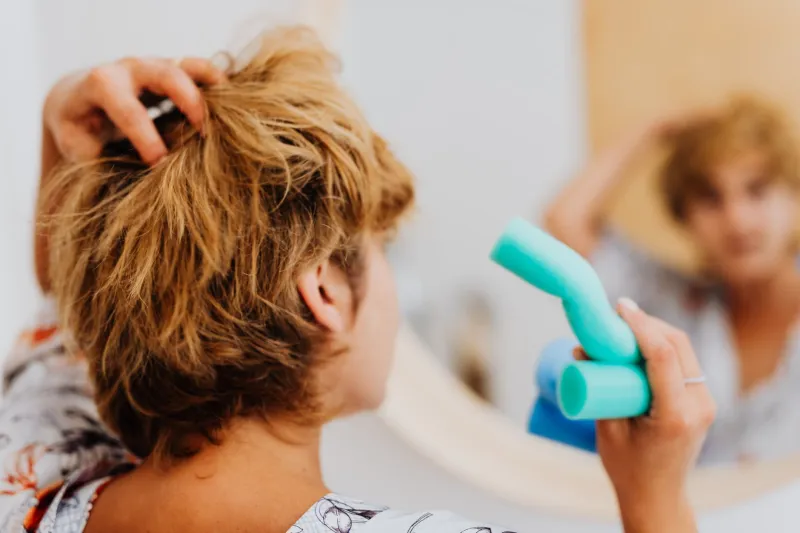
Nobody warns you about this part. My hair wasn't damaged OR healthy yet — it was in limbo, and it looked like it. My natural texture started waking up, but the mid-lengths and ends had been heat-trained straight for so long that my head had, like, three different textures happening at once.
I won't lie, I wore a claw clip every single day. (No regrets. Claw clips remain undefeated.)
What helped: Dry texture spray at the roots for grip, and accepting that week-one hair is not the final report.
Week 3–4: The Texture Comes Back Online
This is when things got interesting. My waves — the ones I genuinely forgot I had — started showing up near the scalp, where the hair is newest. The ends? Still straight and crispy. It was honestly wild seeing the damage map on my own head: everything my iron touched was a different hair type than everything it didn't.
A trims-only appointment around week four made a huge difference. Cutting off the worst two inches gave the healthy texture room to be the main character.
Week 5–8: The Payoff (With an Asterisk)
By month two, my hair was noticeably softer, shinier near the roots, and my waves had actual definition. But here's the asterisk: the heat damage in my ends didn't reverse. It can't. More on that below.
So... Is Heat Damage Reversible? I Asked an Expert
Short answer from every stylist I talked to: no. Once the protein bonds in the hair shaft are broken by heat, no product can glue them back. What products CAN do is temporarily fill in the gaps — bond-repair treatments (the Olaplex-style category) and protein-free moisturizing masks made my compromised ends look and feel dramatically better, even though structurally they were still damaged.
The only true fix for heat-damaged ends is cutting them off. Which is why I booked the trim and stopped fighting it.
The Product Swaps That Got Me Through
- A leave-in with heat protection anyway. Sounds backwards, but these are usually the most hydrating formulas, and it built the habit back for when I DO use heat again.
- Bond repair treatment once a week. Non-negotiable. This is the single biggest reason my ends stopped feeling like straw.
- A microfiber towel. Less friction, less frizz, zero effort.
- A soft-hold styling cream instead of gel. My waves needed encouragement, not a crunchy cast.
- Satin pillowcase. The overnight frizz difference was real by week three.
Styling the Awkward Phase (So You Don't Hate the Mirror)
If you're mid-transition, these are the moves that saved me:
- The low, loose bun with face-framing pieces. Hides the texture mismatch entirely and looks intentional.
- Braids while damp. Two loose braids overnight gave my ends just enough bend to blend with my roots.
- Headbands and scarves. A wide headband over a half-up style made week two actually cute instead of actually tragic.
- The claw clip, always. America's most affordable accessory is also the heat-free transition's best friend.
Would I Do It Again?
Yes — and I'm keeping a modified version of it. My flat iron is back in rotation, but maybe once a month at 350 degrees instead of weekly at 410. My hair genuinely looks and feels different, my waves require almost zero effort now, and I got comfortable with my natural texture for the first time since middle school.
Sixty days felt long. It wasn't. And unlike most things I've quit, this one came with better hair at the end.